Modern scholarship has played an important role in understanding post-Byzantine religious art and engraving. Researchers such as D. Papastratos have studied Greek Orthodox religious engravings produced between the seventeenth and nineteenth centuries, showing how printed images became a major part of devotional culture. Other scholars, including V. della Dora, have examined the poetic and political meaning of post-Byzantine “cartographic icons,” which combined sacred imagery with geographical ideas. These studies help us see that post-Byzantine art was not only a continuation of tradition but also a response to changing cultural, intellectual, and social conditions Printing Reproduction and Wider Access to Icons.
During this period, theoretical writings and artistic manuals also began to appear in greater numbers. Under the influence of Panagiotis Doxaras, new guidebooks and manuals were produced, often with a persuasive and instructional purpose. These texts encouraged artists to adopt a more naturalistic style and to observe nature more carefully. Doxaras’s artistic theory remained influential well into the 1830s, especially among painters who were open to Western artistic ideas.
The Victory of Traditional Views
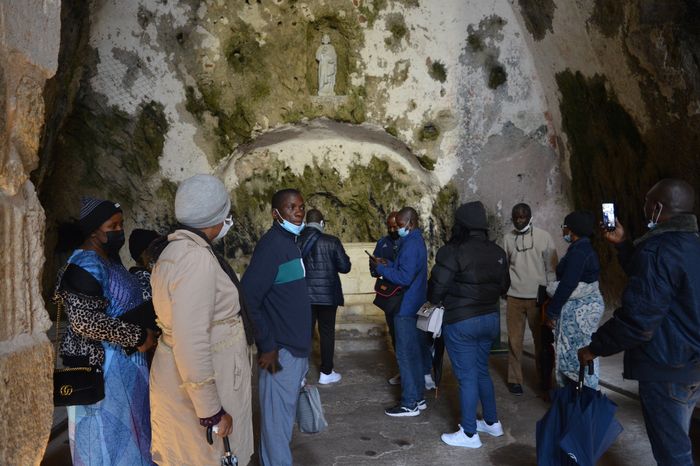
Despite the growing influence of Western artistic theories, the views of Dionysios of Fourna eventually gained wider acceptance among the Greek Orthodox community. His emphasis on traditional Byzantine models, strict iconographic rules, and copying earlier masters resonated strongly with religious institutions and patrons. As a result, most painters followed his guidance and continued to produce icons in a style closely connected to Byzantine tradition Local Ephesus Tour Guides.
Because of this strong attachment to tradition, the possibilities for radical artistic change became limited. Creative innovation was not completely rejected, but it was carefully controlled. Artists were expected to respect established forms, sacred symbolism, and theological meanings. In this conservative environment, only a minority of painters continued to look to Western art for inspiration. Even then, they adopted only selected elements, such as softer colors, improved shading, or more natural facial expressions.
Selective Western Influence and Cultural Identity
For many Greek Orthodox artists, a full adoption of Western artistic styles would have meant more than a simple aesthetic change. It could have been seen as a rejection of their religious and cultural heritage. Orthodox icon painting was deeply connected to faith, tradition, and communal identity. Therefore, abandoning the Byzantine visual language entirely would have risked the loss of a shared cultural and spiritual identity.
Nevertheless, some painters managed to create eclectic solutions. They combined certain Western artistic techniques with traditional Byzantine composition and symbolism. In this way, they avoided a complete break with the past while still responding to new artistic trends. Their works show a careful balance between continuity and adaptation.
Understanding “Byzantinism” and “Byzantinising”
While studying post-Byzantine icons, scholars frequently encounter the terms “Byzantinism” and “Byzantinising” in academic literature. These concepts are important for understanding the artistic choices of the period. “Byzantinism” generally refers to the continuation of Byzantine artistic traditions, including stylized figures, symbolic compositions, and strong spiritual expression. “Byzantinising,” on the other hand, describes the deliberate imitation of Byzantine styles by later artists.
A preface written by a monk named Leontios criticizes the decline in quality and skill in icon production, which he connects to insufficient training in traditional techniques. He also mentions the increasing demand for icons and frescoes painted in the Byzantine manner. In this context, “byzantinising” meant producing works that looked authentic and faithful to earlier sacred models. Such works were not only spiritually valued but could also be financially rewarding for painters.
Demand, Training, and Artistic Practice
As the demand for icons and church decoration grew, workshops and individual artists had to produce more works within shorter periods of time. This situation sometimes led to a decrease in technical quality. Manuals and traditional guides therefore became essential tools for training apprentices and maintaining artistic standards. These texts taught proper iconography, composition, and painting techniques based on earlier Byzantine examples.
In conclusion, the post-Byzantine period was marked by a complex interaction between tradition and innovation. While Western influence introduced new artistic ideas, the Greek Orthodox world largely remained committed to Byzantine visual heritage. The concepts of Byzantinism and Byzantinising show how artists preserved their cultural identity while adapting to changing artistic and intellectual environments.