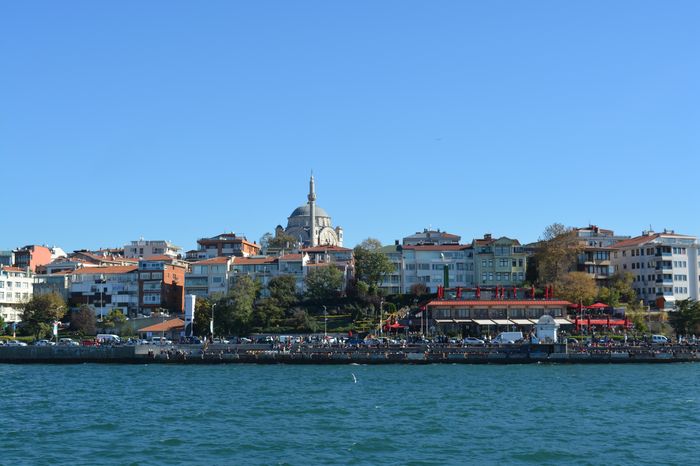
The name “Palace of Hormisdas” gradually disappears around the same time the term “Bucoleon” begins to appear. This supports the idea that both names referred to the same palace, just at different times in its history. The earlier title honoured the Persian prince Hormisdas, who had been denied the throne of Persia by a conspiracy of nobles. He was imprisoned in a tower but managed to escape with the clever help of his wife. Seeking protection, he fled to New Rome, where Emperor Constantine the Great welcomed him and assigned him a residence close to the imperial palace Defensive Works at the Bucoleon Palace.
Hormisdas as a Royal Residence
Later, the palace became the home of Justinian while he was still Crown Prince. He lived there with his wife, Theodora. After ascending to the throne, Justinian enlarged and improved the palace, annexing it to the Great Palace complex. The residence continued to serve prominent members of the imperial family. During the reign of Justin II, for example, it became the home of Tiberius when he was appointed Caesar. Normally, a Caesar would live in the Great Palace, but circumstances prevented this.
Court Intrigues and Imperial Jealousy
The reason Tiberius did not occupy the Great Palace involved court politics. Empress Sophia, wife of Justin II, was intensely jealous of Tiberius’s wife, Ino. She forbade Ino from appearing at court under any pretext. As a result, Tiberius chose the Palace of Hormisdas, since it was close to the Great Palace, allowing him to maintain contact with his family and carry out his official duties.
Despite relocating, Ino could not escape Sophia’s jealousy. The empress’s influence was so strong that even in the Palace of Hormisdas, the ladies of the court dared not visit her. Eventually, the situation became intolerable, and Ino was forced to leave the capital entirely, retiring to Daphnusium Private Golfing Tour Turkey.
Continuity and Historical Significance
This history shows how the Palace of Hormisdas functioned as an important residence for the imperial family over centuries. Its proximity to the Great Palace made it a convenient home for heirs, relatives, and high-ranking officials. Over time, the palace was renamed the Bucoleon, reflecting the changes in imperial fashion, architecture, and terminology. Despite the change in name, the palace retained its central role in the life of Constantinople’s rulers.
The story of Hormisdas illustrates the combination of personal, political, and historical factors that shaped the city’s topography. It was not just a building; it was a witness to royal intrigue, family disputes, and the evolving identity of the Byzantine Empire. The transition from Hormisdas to Bucoleon highlights how names and functions of imperial structures could change while remaining connected to the broader narrative of the city’s history.